
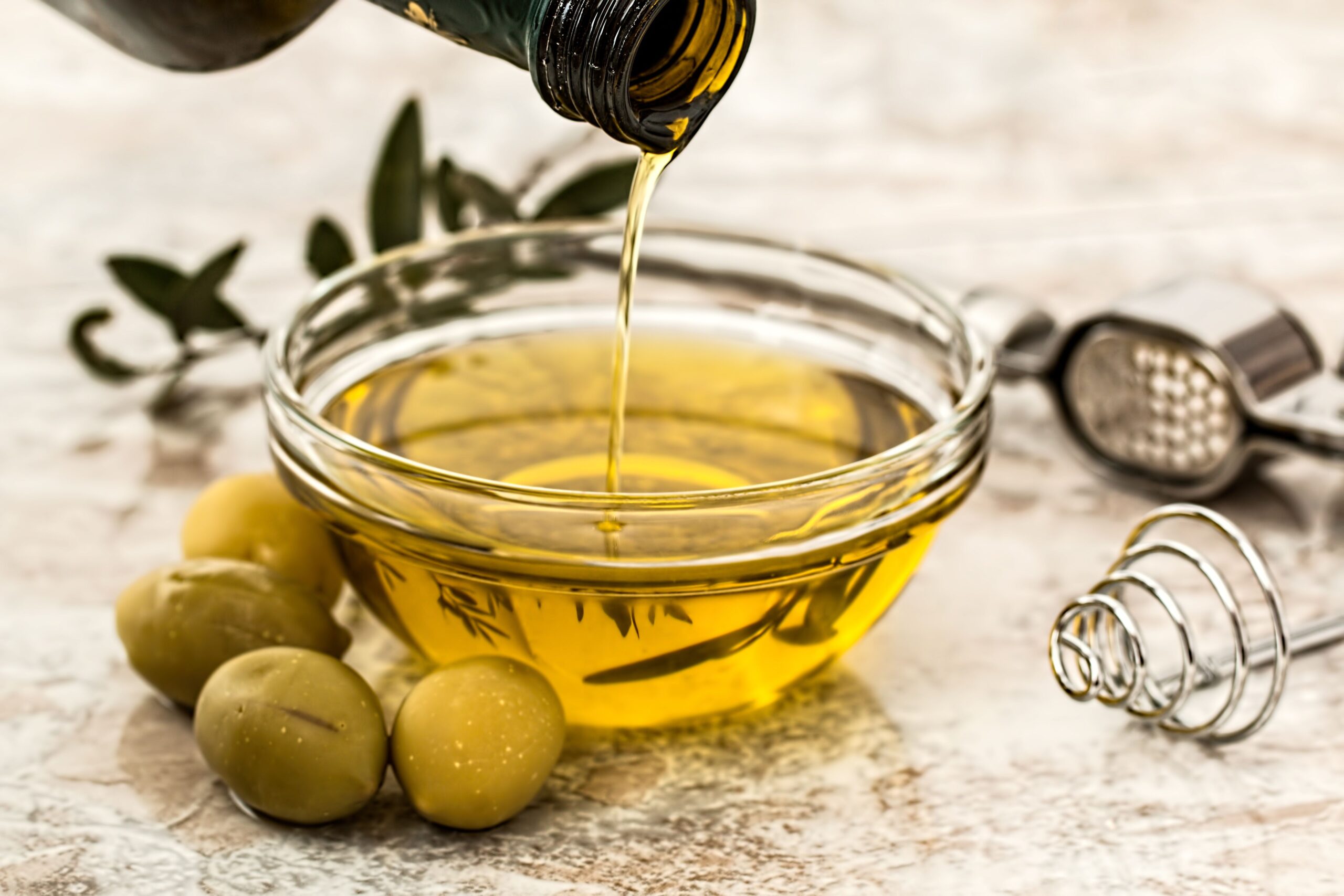
What are oleogels? How do they work? How are they revolutionizing the food industry?
Key notes
- Oleogels trap liquid unsaturated vegetable oils (like olive or avocado oil) within a 3D network to mimic solid fats.
- They can replace traditional fats across a wide range of products—including meats, margarines, baked goods, and ice creams—while improving stability and reducing oil migration.
- A primary challenge for scientists is formulating oleogels with the right rheological, texturizing, and oil-binding properties using low concentrations of gelators to successfully match traditional fat performance.
Introuduction
Oleogels are gelled systems made with an oil phase entrapped in a gel-like structure formed by a three-dimensional network made from proteins or hydrocolloids; these ingredients are commonly called oleogelators or just gelators. They are currently a promising alternative to traditional solid fats that are high in saturated and trans fats; both are associated with several health issues.
Current health concerns have been responsible for the development of novel alternative health products that could reduce or diminish the negative health effects of solid fats, and thus the development of these novel food products based on unsaturated fatty acids processing from vegetable oil such as olive oil and avocado oil.
Oleogels are formulated from a base network made from a gelling agent or oleogelators. Their production requires the use of oleogelators in low concentration that are able to entrap the oil in their three-dimensional structure and thus impart a solid-like structure to the oil. The main challenge scientists confront in the development of this product is associated with the functional properties required for the production of several food products; thus, it is of the utmost importance to determine the rheological and texturizing properties of the oleogel, as well as their oil binding and stabilizing properties.

Potential Uses
A wide variety of potential uses can be applied for these alternative fat mimetics or substitutes; among the most relevant ones are: meat products, margarine, cream, baked goods, spreads, ice creams, cakes, cookies, and cream cheese.
Oleogels provide a better lipid profile than their traditional fat counterparts, due to lower levels of saturated fatty acids and the absence of trans fats, as well as the higher degree of mono- and polyunsaturated fatty acids. They can also help improve the formulated food product by reducing oil migration, acting as a replacement of oil binder or as a partial replacement of palm oil, controlling volatile release, and decreasing oil absorption.

Oil continuous phase or water continuous phase
Emulsions have a continuous and a dispersed phase; both water and oil can be in either phase, depending on the type of emulsion. Water or oil will be present as small droplets in a continuous phase or be the continuous phase where the small droplets are entrapped. Emulsions are the product of the stabilization of two immiscible substances due to their polar or nonpolar character; they are accomplished by the use of emulsifiers and mechanical forces commonly generated by high-speed blenders, colloidal mills, and/or high-pressure homogenizers.
Phase structuring
Structuring of the continuous phase can happen through three mechanisms: Pickering (stabilization with solid particles), three-dimensional network, and a combination of both.
The type of mechanism applied to the formulation of the emulsion and gelator concentration; two states of emulsions can be obtained: solid or semi solid, this type of emulsions are fairly stable and are able to achieve kinetic stability.
Oil in water (O/W) emulsions are stabilized by electrostatic and steric repulsions, while water in oil (W/O) emulsions are commonly stabilized by steric repulsion due to the low electrical conductivity of the continuous phase.
Conclusion
Oleogels present an interesting opportunity for food scientists around the globe, as a potential fat substitute or fat mimetic for products high on saturated and trans fats by providing the required functional properties while maintaining their beneficial health properties.
References
- Bascuas, S., Hernando, I., Moraga, G., & Quiles, A. (2020). Structure and stability of edible oleogels prepared with different unsaturated oils and hydrocolloids. International Journal of Food Science & Technology, 55(4), 1458-1467.
- Stortz, T. A., Zetzl, A. K., Barbut, S., Cattaruzza, A., & Marangoni, A. G. (2012). Edible oleogels in food products to help maximize health benefits and improve nutritional profiles. Lipid Technology, 24(7), 151-154.
- Patel, A. R., Cludts, N., Bin Sintang, M. D., Lewille, B., Lesaffer, A., & Dewettinck, K. (2014). Polysaccharide‐based oleogels prepared with an emulsion‐templated approach. ChemPhysChem, 15(16), 3435-3439.
- Silva, T. J., Barrera‐Arellano, D., & Ribeiro, A. P. B. (2021). Oleogel‐based emulsions: Concepts, structuring agents, and applications in food. Journal of Food Science, 86(7), 2785-2801.


Leave a Reply